


How do you identify your face shape?
Compare three widths — forehead, cheekbones, and jaw — against your overall face length from hairline to chin. Whichever zone is widest (and whether the jaw is soft or angular) tells you the shape. Pull your hair back, stand in front of a mirror with even lighting, and look straight on. For the tape-measure version with the exact ratio bands, see how to find your face shape.
Context for why this matters: according to The Vision Council, roughly three in four US adults use some form of vision correction — so getting the fit right affects hundreds of millions of daily wearers.
- Oval — length is about 1.5× the cheekbone width; jaw is slightly narrower than cheekbones; no sharp angles.
- Round — length and width are roughly equal; cheeks are fullest; chin is soft.
- Square — forehead, cheekbones, and jaw are about the same width; jaw is strong and angular.
- Heart — forehead is the widest point; chin is narrow and pointed.
- Diamond — cheekbones are the widest; forehead and jaw are narrower.
- Oblong (rectangle) — face is noticeably longer than it is wide; straight cheekbones.
If you're between two shapes — and most people are — use the shape that dominates the widest part of the face.
Face shape → frames cheat sheet
| Face shape | Best frames | Avoid |
|---|---|---|
| Oval | Wayfarer, aviator, geometric, moderate round | Frames wider than the face; overly deep lenses |
| Round | Rectangle, wayfarer, cat-eye, browline | Round frames; small rimless styles |
| Square | Round, oval, aviator, thin frames | Rectangular/angular frames; thick heavy acetate |
| Heart | Aviator, round, rimless, bottom-heavy | Top-heavy brow bars; embellished cat-eyes |
| Diamond | Cat-eye, oval, browline, decorative top | Narrow rectangles; low-sitting frames |
| Oblong | Deep/tall, round, strong brow bar, oversized | Small narrow frames; slim rectangles |
Shortcut: you don't have to eyeball this. Frame's AI face-shape analysis runs in about 10 seconds from your iPhone camera and tells you the exact shape — plus every frame that suits it. For a walkthrough of how the scan works, see the support page.
Which glasses suit an oval face?
Oval is the easiest face shape to dress, because it's already balanced. Almost every frame style works. Your job is to avoid upsetting the existing proportions rather than fixing them.
Best frames for oval faces
- Wayfarers and classic rectangles — they follow the natural balance of the face.
- Aviators — the slight teardrop emphasizes cheekbones.
- Geometric frames (hexagonal, octagonal) — oval faces can carry more extreme shapes than anyone else.
- Round frames of moderate size — they soften without overwhelming.
What to avoid
- Frames that are wider than your face — they disrupt the natural symmetry.
- Overly deep lenses that lengthen an already balanced face.
What frames work best for a round face?
Round faces benefit most from angles. Sharp lines and straight edges create the illusion of cheekbones and a more defined jaw. For the millimeter targets — frame width, lens depth, hinge height — see the full guide to glasses for round faces.
Best frames for round faces
- Rectangular and square frames — the go-to for adding structure.
- Wayfarers with strong horizontal brow bars.
- Cat-eye frames — the upswept corners lift the face.
- Browline (clubmaster) frames — define the upper third of the face.
What to avoid
- Round frames — they amplify roundness.
- Small, delicate frames — they get lost on a fuller face.
- Rimless frames with no visible line — they fail to add the structure round faces need.
What glasses suit a square face?
Square faces are strong and angular. The goal is to soften — you want curves and gentle lines to balance sharp jaw and forehead. The full breakdown, including the progressive-lens trap that catches small round frames, is in glasses for square faces.
Best frames for square faces
- Round frames — the single most flattering choice.
- Oval frames — softer than round, still curved.
- Aviators — the teardrop counters the square jaw.
- Thin frames in general — heavy frames double up the angularity.
What to avoid
- Rectangular or angular frames — they echo the face and make it look boxy.
- Thick, heavy frames — they pile weight on an already strong face.
What glasses flatter a heart-shaped face?
Heart-shaped faces are wide at the forehead and narrow at the chin. The trick is to add visual weight to the bottom and avoid emphasizing the forehead.
Best frames for heart-shaped faces
- Bottom-heavy frames — wider or darker at the lower half than the top.
- Aviators — classic fit for hearts, the downward sweep balances the chin.
- Round frames — they soften the forehead's width.
- Rimless frames — they disappear at the top, visually slimming the widest area.
What to avoid
- Top-heavy frames with thick brow bars — they widen the forehead further.
- Frames wider than the forehead — same problem.
- Embellished cat-eyes — they pull attention upward.
What glasses suit a diamond face?
Diamond faces have narrow foreheads, wide cheekbones, and narrow chins. They're rarer and strikingly photogenic. You want frames that highlight the eyes and broaden the forehead.
Best frames for diamond faces
- Cat-eye frames — the lifted corners balance the chin and draw attention upward.
- Oval frames — they soften the sharp cheekbone angles.
- Browline frames — they visually widen the forehead.
- Rimless frames with a decorative top — same effect as browlines, lighter feel.
What to avoid
- Narrow, rectangular frames — they emphasize the already-wide cheekbones.
- Frames that sit low — they make the chin look even narrower.
What glasses suit an oblong face?
Oblong faces are longer than they are wide. Most frame styles can work, but the trick is to shorten the face visually.
Best frames for oblong faces
- Deep, tall frames — they take up more vertical real estate, shortening the face.
- Round or oval frames of substantial size.
- Wayfarers with a strong brow bar — the horizontal line breaks the vertical.
- Oversized frames — they work on oblong faces where they'd overwhelm others.
What to avoid
- Small, narrow frames — they get lost and lengthen the face further.
- Rectangular frames that mirror the face proportions.
The same geometry rules apply to shades — with one twist: a dark lens hides your eyes, so shape and proportion matter even more. We break down the sunglass-specific picks per shape in our sunglasses by face shape guide.
Does frame colour matter as much as shape?
Shape handles the geometry. Color handles the mood. Once you know which shapes work, layer a color decision on top — and for the undertone tests and the lightness-contrast rule behind them, see best glasses color for your skin tone:
Thin gold frames on warm skin feel effortless. The same frame in matte black on cool skin looks sharp and intentional. The same-shape frame in a mismatched color feels "off" even when you can't articulate why. If you're unsure of your undertone, check the veins on your inner wrist — guidance from the AAO on frame materials notes that greenish veins usually indicate warm undertones, blue or purple indicate cool.
Can you try glasses on before buying online?
Yes — virtual try-on apps render photorealistic frames on your face in about 10 seconds using the iPhone camera. The best guide in the world still can't tell you exactly how a specific frame will sit on your nose bridge, cheekbones, and brow. Industry reports consistently put online eyewear return rates at 20–30%, with fit and appearance mismatch the leading reasons — exactly the gap virtual try-on is built to close.
The American Academy of Ophthalmology and the American Optometric Association both emphasize checking fit in person before committing — something VTO solves without a store visit.
Frame is a free iOS app that does three things:
- Scans your face in 10 seconds via the iPhone camera.
- Analyzes your face shape using AI and tells you what suits you.
- Renders any frame on you photorealistically — you import a URL from any eyewear site, one tap.
Read more in our eyewear guides, or jump straight to the Frame app.
It replaces the "I hope this looks okay" moment with an actual image of you wearing the exact frame before you buy. While building Frame we tested over 300 frame styles against real faces to calibrate the shape-matching model — the failure case is almost always people choosing frames that echo their face shape instead of contrasting it.
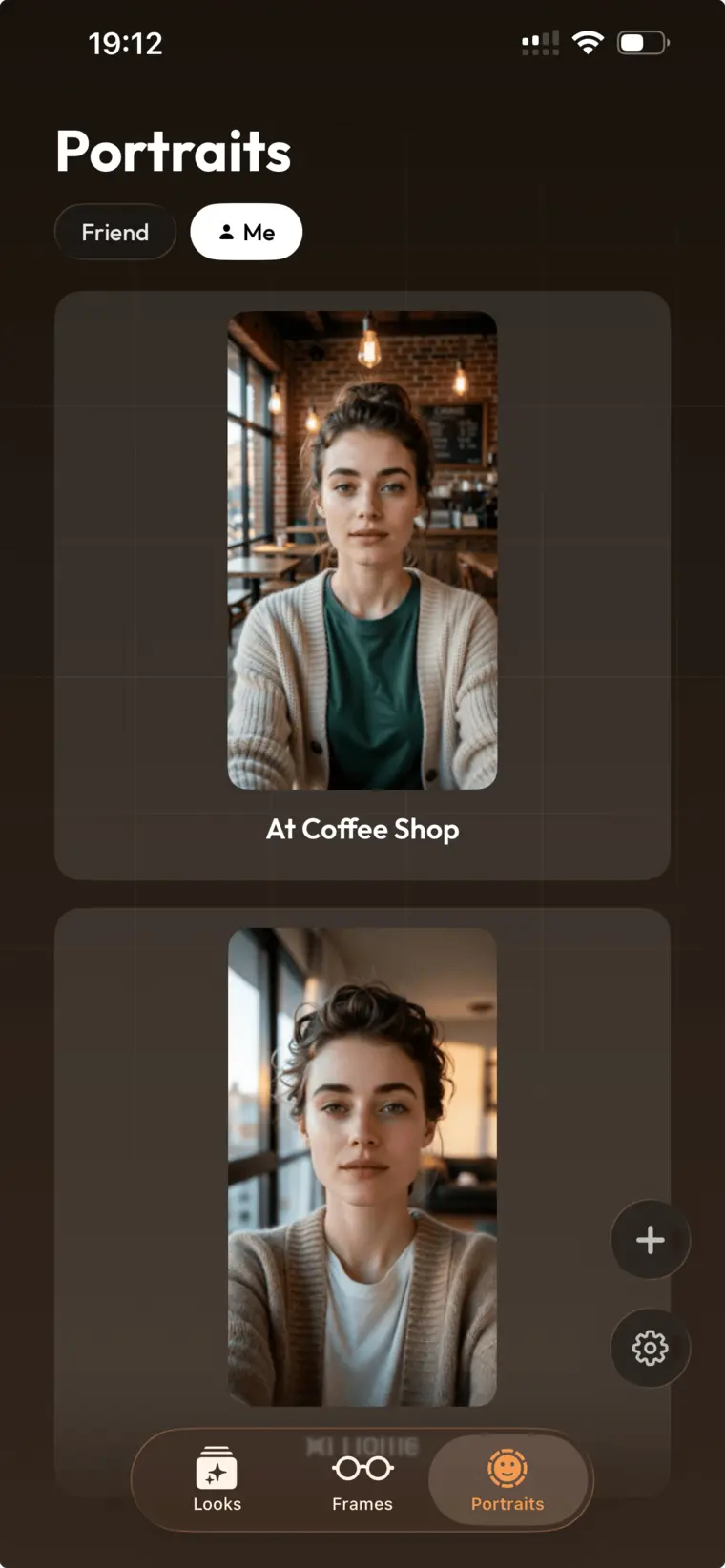
Scan your face
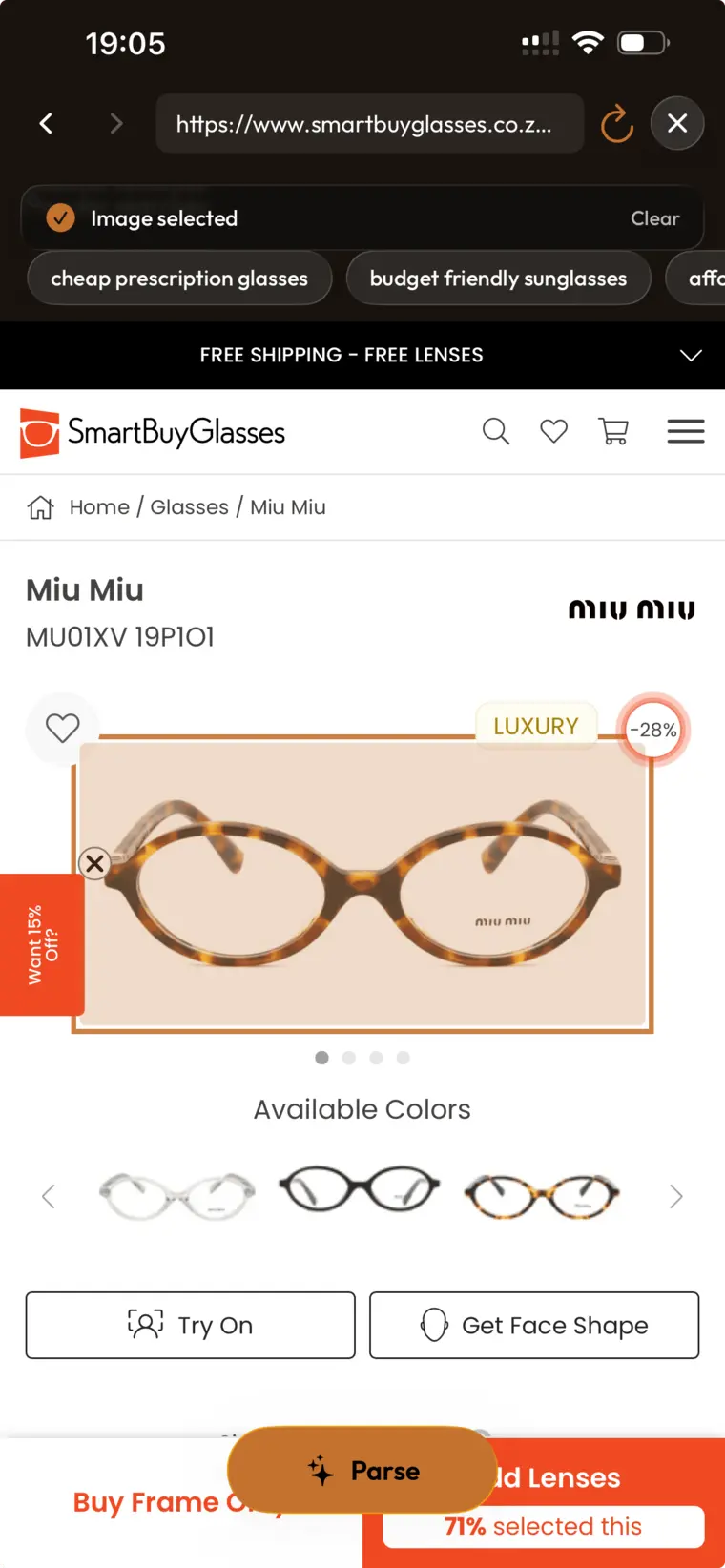
Import any frame

See them on you
Try on any glasses instantly
Scan once. Import from any brand. See them on you in seconds.
Download Frame for iOS